Ars Technica Every one of the 519 stories Ars Technica has led with here, newest first. arstechnica.com consumer hardware Amazon's new Alexa Tablets drop the Fire branding but are more Android than ever Amazon's new Alexa Tablets replace Fire branding and run standard Android with Google Play instead of Amazon app store. Ars Technica · 3h ago For the last 15 years, you've been able to buy a Fire tablet from Amazon. Which Fire tablet? It doesn't matter—like Kindles, they have been pretty much the same year to year. The company's new tablet lineup is a big change, though. Amazon has dropped the Fire branding in favor of Alexa, and the new Alexa Tablets are now Google-certified Android devices. Throughout the history of Fire Tablets, Amazon downplayed its use of Android. They ran Android apps from the company's Appstore platform, but there was no Google integration with "Fire OS." However, Amazon shut down its app store last year. The new Alexa Tablets run full-fledged Google-y versions of Android with the Play Store and all the apps you'd… space, infrastructure Amazon builds 1,000th satellite, will launch space internet service by end of year Amazon builds its 1000th satellite and plans to launch space internet service by end of year. Ars Technica · 4h ago The world's largest retailer wants to sell you something else—Internet from space. Amazon has been developing a constellation of satellites to deliver broadband Internet from low-Earth orbit for the better part of a decade, and the company is just about ready to pull back the curtain. It is entering a market that SpaceX, with its Starlink Internet, has dominated for the last half-decade. Amazon's debut into satellite Internet is being closely watched, not just by some consumers, but by businesses ranging from airlines to shipping companies to governments. Broadband Internet from orbit has proven broadly useful for a lot of purposes, from video games to commerce to warfighting. But until now, most people had to buy it from Elon Musk… Climate, corporate accountability ExxonMobil's own scientists doubted climate fixes the company hyped Court filings reveal ExxonMobil scientists doubted company's climate solutions. Ars Technica · 5h ago If there was a year the world began waking up to climate change, it might have been 1988. That June, the NASA climatologist James Hansen testified to Congress that the climate was warming and would continue to do so as long as humans pumped fossil fuel pollution into the atmosphere. Months later, the United Nations established the Intergovernmental Panel on Climate Change. And, just weeks before the U.N. vote, Frank Sprow of Exxon’s corporate research department warned his colleagues in an internal memo, “If a worldwide consensus emerges that action is needed to mitigate against Greenhouse gas effects, substantial negative impacts on Exxon could occur.” Sprow’s memo is part of a batch of previously undisclosed documents released earlier this year… Nvidia, physical AI Nvidia's big bet on physical AI aims for safer robotaxis, humanoid robots Nvidia develops safety systems for physical AI in robotaxis and humanoid robots. Ars Technica · 8h ago Investors bullish on AI data centers may be fueling Nvidia’s multi-trillion-dollar market capitalization, but the AI chipmaker has also bet billions of dollars on physical AI technologies such as robotics and self-driving cars. Part of that gambit has involved Nvidia developing a full-stack safety system that companies can build upon to reduce the risk of their machines harming nearby people. Nvidia's Halos system launched in 2025 with hardware and software tools to help developers implement guardrails in self-driving cars and other autonomous vehicles. Then the company expanded its safety architecture to more physical AI technologies by announcing Nvidia Halos for Robotics in June 2026—with the goal of enabling safe deployments of autonomous mobile robots in warehouses, humanoid robots walking around… regulation, prediction markets A senator tried to ban gambling on prediction markets—now she's a Kalshi lobbyist Former senator who restricted prediction market contracts now lobbies for the same markets. Ars Technica · 8h ago In July 2010, US Senator Blanche Lincoln (D-Ark.) predicted the rise of prediction markets and the problems they could cause. If not properly regulated, Lincoln warned during Senate proceedings on the Dodd–Frank Wall Street Reform and Consumer Protection Act, prediction markets could evade gambling laws by offering "event contracts" that let people place wagers on sports games. "It would be quite easy to construct an event contract around sporting events such as the Super Bowl, the Kentucky Derby, and Masters golf tournament," Lincoln, who played a key role in making the law that now regulates prediction markets, told fellow senators. "These types of contracts would not serve any real commercial purpose. Rather, they would be used solely for gambling." Today,… Microsoft, Windows AI Microsoft event debuts new AI-friendly hardware and Windows changes Microsoft announces new hardware and Windows features designed to run AI models locally on PCs. Ars Technica · 19h ago In its first live event in two years, Microsoft today announced its newest Surface laptop, outlined a host of changes coming to Windows 11, and shared a vision of how local-AI and agentic workflows could reshape personal computing for those in the dev community as well as home enthusiasts. Surface Laptop Ultra Originally teased in May 2026, the new Surface Laptop Ultra will be Microsoft's first offering to take advantage of the new Nvidia RTX Spark SoC (system on a chip). The device has a starting price of $2,599, and comes in various SoC and memory configurations, with either a 5120-core or 6144-core Blackwell GPU and up to 128GB of LPDDR5x unified memory. It will begin shipping on October 16… generative AI, creative software “Software is over”: Bold AI developer takes aim at Adobe with open source clones Open source AI project creates free alternatives to Adobe's Creative Cloud software. Ars Technica · 22h ago For a while, those hoping to avoid the difficulty and expense of dealing with Adobe's Creative Suite have been able to use several free and/or open-source alternatives that replicate some or all of those capabilities. Now, one developer is using AI-powered reverse engineering to mimic the look, feel, and functionality of Adobe's well-known software with what he hopes will soon be perfect fidelity. Artcraft got its start last year as a "controllable AI for artists" that allows for precise post-generation editing of AI-crafted images and videos. Over the weekend, though, the brand debuted its pivot to a suite of seven open source apps recreating the user interface and tools found in Adobe's Photoshop, Illustrator, Premiere, Lightroom, After Effects, InDesign, and… public health PA measles outbreak tops 1,000 cases, largest since disease was eliminated Pennsylvania reports over 1,000 measles cases in its largest outbreak since elimination. Ars Technica · 23h ago Pennsylvania's explosive measles outbreak is now the largest the US has seen since the highly infectious virus was declared eliminated in 2000. With well over 1,000 cases, it's the largest on record since 1991. Pennsylvania's health officials reported 1,078 measles cases in all of 2026 as of this afternoon. That includes 12 cases in January and March, with the remaining 1,066 cases since April, when the current outbreak began. The tally includes 145 cases recorded in the last seven days and 74 identified since the previous update on Monday. Health officials noted that 40 of the 74 cases added today were from more than two weeks ago and are just now being recorded. Among the cases, there have been 207… network hardware TP-Link problems in US grow amid FCC router ban and four state lawsuits TP-Link faces US market restrictions from FCC router ban and state lawsuits. Ars Technica · 1d ago TP-Link is facing more legal troubles in the US as Florida and three other states filed lawsuits alleging that it lied to consumers about its connections to China and the risks of its routers being exploited by Chinese state hackers. The lawsuits were filed yesterday, about six months after the Federal Communications Commission announced a sweeping ban on consumer-grade routers produced wholly or partly outside of the US. Numerous router makers have obtained exemptions to the ban, but the Trump administration so far has not granted one to TP-Link. Router makers that received exemptions include Netgear, Asus, Adtran, Amazon and its Eero subsidiary, Calix, Nokia, SpaceX's Starlink division, and others. For now, TP-Link is unable to sell its latest Wi-Fi… chemistry research Chemistry Nobel goes to reactions like those that gave life a hand Chemistry Nobel Prize recognizes research on molecular handedness relevant to life's origins. Ars Technica · 1d ago Life is remarkably selective. Life relies on many molecules with what is termed "handedness"—they're chemically identical but are mirror images of each other. Most chemical reactions will make a 50-50 mix of the left- and right-handed forms of a chemical, but life uses only one of them. In fact, because of the differences between left- and right-handed chemicals, most of the key enzymes used by organisms will fail to work if they're presented with chemicals that have the wrong handedness. That poses a bit of a challenge for origin-of-life research, as we're forced to explain how a world that may have started with an even mix of left- and right-handed chemicals produced organisms that only used one of them. Today's… public health policy Pediatricians renew call to ban raw milk as anti-science rhetoric reigns Pediatricians renew policy recommendations to ban raw milk, emphasizing benefits of heat treatment. Ars Technica · 1d ago As many doctors are moving ahead with the latest advances of modern medicine—from powerful obesity drugs to breakthrough cancer treatments—pediatricians are being forced to turn back, fighting to maintain advances in children's health that were hard-won decades ago. With anti-vaccine advocate Robert F. Kennedy Jr. as health secretary, the American Academy of Pediatrics (AAP) has spent a considerable amount of time and resources in the past year fiercely defending lifesaving vaccinations—safe, routine shots that have saved the lives of millions of children over decades and thwarted untold suffering and disability. But just this week, The New York Times reported that Ken Paxton, the attorney general of Texas, has opened aggressive investigations against pediatricians simply because they vaccinated their patients. Paxton… AI fraud and music Fraudster jailed for using 10K bots and AI songs to outstream Taylor Swift Man jailed for using AI-generated songs and bot networks to steal $8 million in music streaming royalties. Ars Technica · 1d ago After pleading guilty, a 54-year-old North Carolina man, Michael Smith, was sentenced to 18 months in prison for using artificial intelligence to generate songs for a scheme that stole millions from music streaming platforms. In a press release Tuesday, the US Department of Justice said that Smith is the first American criminally charged with AI-assisted streaming fraud. First charged in 2024, Smith successfully ran the scheme for seven years without detection. electric vehicles Jaguar Type 01 debuts; now, no one remembers the electric Ferrari Jaguar Type 01 electric car design generates online debate about EV aesthetics. Ars Technica · 1d ago Does it feel like people are perhaps a little grumpier or more on edge these days? It’s not like it’s without reason. There are wars. The climate is going haywire. Someone just died of plague. Scientific research is under attack. Machines keep stealing humans’ work. The media is a mess. And just when it all starts to feel a little overwhelming, Jaguar goes and unveils a new car. The Type 01 is the first model to arrive from Jaguar’s rebirth. The British carmaker was an early entrant to the modern EV market with the 2017 I-Pace, which was fun to drive even if it was too small inside and perhaps completely unreliable. An all-electric sedan was supposed to be next,… tech manufacturing policy Trade group crunches numbers on Trump’s impossible push for 100% US-made tech CTA estimates Trump's 100 percent US-made tech mandate would cost firms $230 billion. Ars Technica · 1d ago One of Donald Trump’s biggest goals as president is to increase domestic manufacturing and reshore supply chains so that the most in-demand technologies in the world can be 100 percent made in the United States. By executive order last December, he launched his “Genesis Mission,” an ambitious plan seeking to leverage US dominance in AI to maintain or seize an edge in advanced robotics, biotechnology, semiconductors, and nuclear technologies. According to Trump, that plan works best with self-sustaining supply chains. Not even neighboring countries or longtime allies should be relied upon to manufacture a single component of any US product in his ideal world. The Consumer Technology Association (CTA) has long warned that Trump’s reshoring goals are not grounded in… LLM capability Mistral says "Le Chonk" can challenge the best AI models Mistral releases open-weight model Le Chonk claiming performance parity with top closed models. Ars Technica · 1d ago As tensions mount over who gets access to top-end artificial intelligence, French company Mistral has released a new freely available model that it claims can compete with the very best from the US and China. The new 1 trillion-parameter model, Mistral Large 4—nicknamed Le Chonk—can be used and customized by anyone. It’s currently available in preview, with a final version to follow by the end of the month. Though Le Chonk is built to compete with leading general-purpose models, it’s optimized specifically for coding and cyberdefense, as well as tasks particular to manufacturing, finance, electrical engineering, and other niches. “There are a lot of areas where the other labs will not focus that much,” Guillaume Lample, cofounder and chief scientist… AI detection Google rolls out improved SynthID AI content detector, now available globally Google expands SynthID detector globally to identify AI-generated content from multiple sources. Ars Technica · 1d ago Every piece of AI content from Google's Gemini models has a hidden SynthID label, which makes it very difficult to pass the content off as authentic. SynthID has also gotten buy-in from other major AI players, but actually checking for those invisible watermarks has been a convoluted process. It's going to be a little easier going forward, though. Google has announced that its SynthID detector now supports watermarks from all its partners, and it's available for anyone to use on a new dedicated website. SynthID is an invisible signal encoded in the pixels of AI-generated images and videos, and in the waveform of AI audio. Google says Gemini alone has integrated SynthID with over 180 billion images and videos, plus… AI in motorsport AI/ML is becoming a performance factor in motorsport OpenAI supports Ganassi motorsport team with AI assistance on vehicle setup optimization. Ars Technica · 1d ago There’s been something of a change in the world of motorsport over the past few years. It has to do with where the money comes from. In the old days, it was tobacco, and to a lesser extent booze. Today such things are mostly banned, and when you look at a racecar covered in sponsor logos, you’re likely to see something crypto-, cyber-, or AI-related. This makes sense—a larger and larger proportion of our GDP is wrapped up in those segments. They’re the ones with all the money, and it takes money to go racing. So at the amateur level, we’ve seen tech CEOs replace dentists as the privateer of choice: This past weekend’s Petit Le Mans included co-founders of… Entertainment Review: Fine, let's talk about Digger Film review of Digger. Ars Technica · 1d ago I found the trailer for Digger intriguing, starring a nearly unrecognizable Tom Cruise and giving off strong Doctor Strangelove vibes. Plus, it is four-time Oscar-winning director Alejandro G. Iñárritu’s (Birdman) first English-language film since 2015’s The Revenant. Those elements quickly moved it near the top of my "must-see" list even if details about the actual plot were lacking. Given Iñárritu’s pedigree, the film seemed poised to be prime Oscar bait. (Major spoilers appear below the gallery. We'll give you a heads-up when we get there.) By now it's clear that Digger is on track to be one of the biggest bombs of the year instead, racking up a mere $20 million globally its opening weekend, against a $125 million (possibly… space exploration If you're looking, here's a "good deal" for NASA and the European Space Agency NASA and European Space Agency pursue joint gravitational wave detector as cost-effective deal. Ars Technica · 1d ago It's no surprise that NASA's new tack toward foreign partnerships—good deals only, please—is challenging preconceived notions of international cooperation in space. Without a massive budget hike, the US space agency's emphasis on building a Moon Base and winning a competition for lunar real estate and resources with China will inevitably leave lesser priorities behind. Gone is the Lunar Gateway, a space station that was to be assembled in orbit around the Moon. For the United States, Gateway was an unnecessary distraction and expense as NASA goes all-in on placing a surface station near the Moon's south pole. Autonomous weapons Drones sink ships near NATO countries in “unacceptable” attacks, EU says Two cargo ships sunk and sailors dead in drone attacks near NATO countries. Ars Technica · 1d ago Drones sank two cargo ships and damaged a third in the exclusive economic zones of NATO member countries for the first time, killing at least two sailors. The attacks represent a notable escalation as Black Sea commercial shipping has increasingly come under attack during the Russian invasion of Ukraine, with Russia also being accused of carrying out “hybrid warfare” incidents across Europe. The Togo-flagged cargo ship Alfa Watan sank, and the Palau-flagged cargo ship Able was set ablaze after being attacked by multiple sea and aerial drones about 80 miles (128 kilometers) off the coast of Bulgaria on October 6, according to the Associated Press. In an interview, Bulgarian Prime Minister Rumen Radev described the incidents as “an unacceptable attack… AI regulation OpenAI will watermark ChatGPT outputs by default—but only in the EU OpenAI adds watermarks to ChatGPT outputs in EU but admits they are unreliable. Ars Technica · 1d ago OpenAI will begin automatically watermarking text generated with ChatGPT in the European Union, the company has announced. It will also offer the watermarking feature in other regions, but it will be off by default outside of the EU. The move in Europe is driven by a need to comply with the EU AI Act, which took effect in August. It requires marking content produced by AI models in a way that another tool can detect. Unfortunately, there is still no completely effective and reliable way to do that. A few standards already exist, like SynthID and the C2PA project, but they are relatively easy to circumvent for anyone with basic know-how. The same is likely true for OpenAI's watermark. Its… Weather It looks like the Atlantic storm season may finally produce a hurricane Atlantic storm season remains unusually quiet so far this year. Ars Technica · 2d ago A low-pressure system in the western Gulf of Mexico should soon become a tropical storm, and based on the latest forecast modeling, it has a decent chance of becoming a hurricane. Normally, a hurricane forming in early October would not be particularly noteworthy. However, this year the development of a hurricane would be a big deal—because it has not happened yet. In the modern hurricane record—an era dating to about World War II when there has been aircraft reconnaissance and later continuous satellite coverage—there has never been an Atlantic season without a hurricane, and no season has gone this late without one forming. Cybersecurity Hackers obtain counterfeit TLS certificates for Google and other large services Hackers obtain counterfeit TLS certificates for Google and other services. Ars Technica · 2d ago Attackers hijacked three top-level domains and used their control to mint counterfeit TLS certificates for Google and other large organizations, Google said Tuesday. The attackers launched a series of attacks on the .gh, .sl, and .as country code top-level domains (ccTLDs) and then modified authoritative DNS records for selected domains within those namespaces. By controlling those DNS records, the attackers were able to pass automated domain control validation checks and obtain unauthorized certificates for “several Google domains” and “several leading global brands and widely used online services.” Google said it updated Chrome to block all certificates it identified as unauthorized, and worked with the issuing certification authorities to ensure the unauthorized certificates for Google properties were revoked. Certificate issuance: The… media mergers Paramount completes $111B Warner merger, creating “Skydance” behemoth Paramount completes acquisition of Warner Bros. to form Skydance entertainment company. Ars Technica · 2d ago Paramount Skydance completed its $111 billion merger with Warner Bros. Discovery today, after a last-ditch effort to block the deal was rejected by Supreme Court Justice Elena Kagan. The post-merger company is called Skydance, taking the name of a firm that Paramount bought in a separate deal last year. The new Skydance combines two of the largest movie studios, streaming services Paramount+ and HBO Max, CBS, CNN, "and a portfolio of live sports including CBS Sports and TNT Sports, as well as a deep programming library and expansive collection of brands and franchises," Skydance said today in a press release announcing completion of the deal. The merger was delayed a bit by a lawsuit filed by California and 11 other… Show 24 more Loading

consumer hardware Amazon's new Alexa Tablets drop the Fire branding but are more Android than ever Amazon's new Alexa Tablets replace Fire branding and run standard Android with Google Play instead of Amazon app store. Ars Technica · 3h ago For the last 15 years, you've been able to buy a Fire tablet from Amazon. Which Fire tablet? It doesn't matter—like Kindles, they have been pretty much the same year to year. The company's new tablet lineup is a big change, though. Amazon has dropped the Fire branding in favor of Alexa, and the new Alexa Tablets are now Google-certified Android devices. Throughout the history of Fire Tablets, Amazon downplayed its use of Android. They ran Android apps from the company's Appstore platform, but there was no Google integration with "Fire OS." However, Amazon shut down its app store last year. The new Alexa Tablets run full-fledged Google-y versions of Android with the Play Store and all the apps you'd…
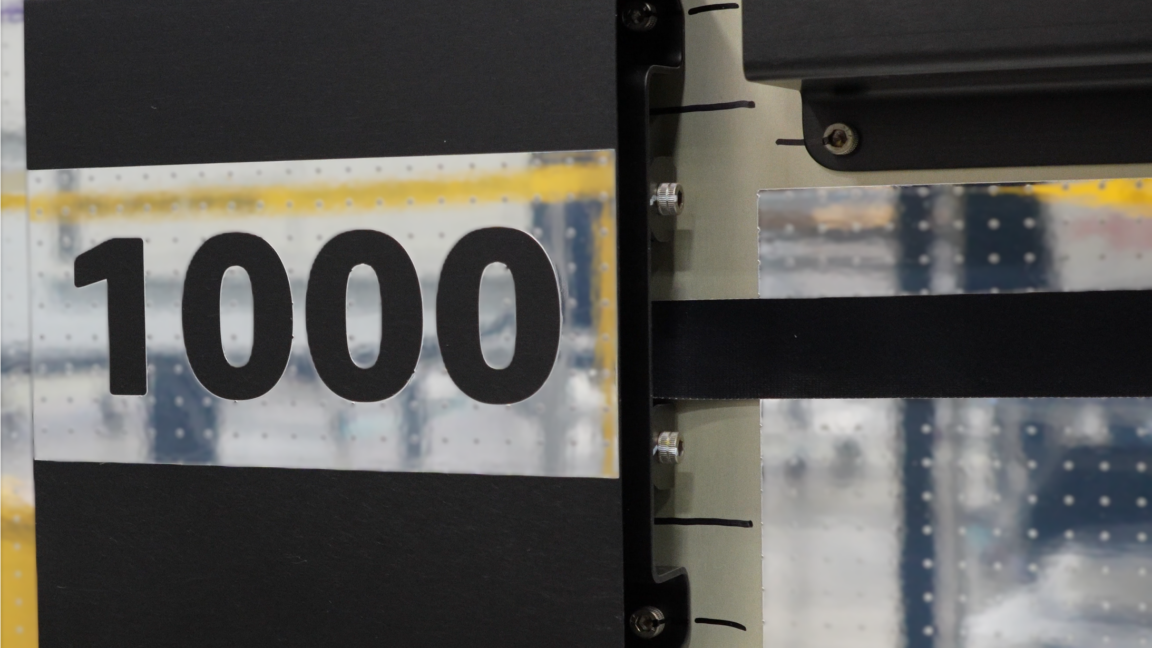
space, infrastructure Amazon builds 1,000th satellite, will launch space internet service by end of year Amazon builds its 1000th satellite and plans to launch space internet service by end of year. Ars Technica · 4h ago The world's largest retailer wants to sell you something else—Internet from space. Amazon has been developing a constellation of satellites to deliver broadband Internet from low-Earth orbit for the better part of a decade, and the company is just about ready to pull back the curtain. It is entering a market that SpaceX, with its Starlink Internet, has dominated for the last half-decade. Amazon's debut into satellite Internet is being closely watched, not just by some consumers, but by businesses ranging from airlines to shipping companies to governments. Broadband Internet from orbit has proven broadly useful for a lot of purposes, from video games to commerce to warfighting. But until now, most people had to buy it from Elon Musk…
Climate, corporate accountability ExxonMobil's own scientists doubted climate fixes the company hyped Court filings reveal ExxonMobil scientists doubted company's climate solutions. Ars Technica · 5h ago If there was a year the world began waking up to climate change, it might have been 1988. That June, the NASA climatologist James Hansen testified to Congress that the climate was warming and would continue to do so as long as humans pumped fossil fuel pollution into the atmosphere. Months later, the United Nations established the Intergovernmental Panel on Climate Change. And, just weeks before the U.N. vote, Frank Sprow of Exxon’s corporate research department warned his colleagues in an internal memo, “If a worldwide consensus emerges that action is needed to mitigate against Greenhouse gas effects, substantial negative impacts on Exxon could occur.” Sprow’s memo is part of a batch of previously undisclosed documents released earlier this year…
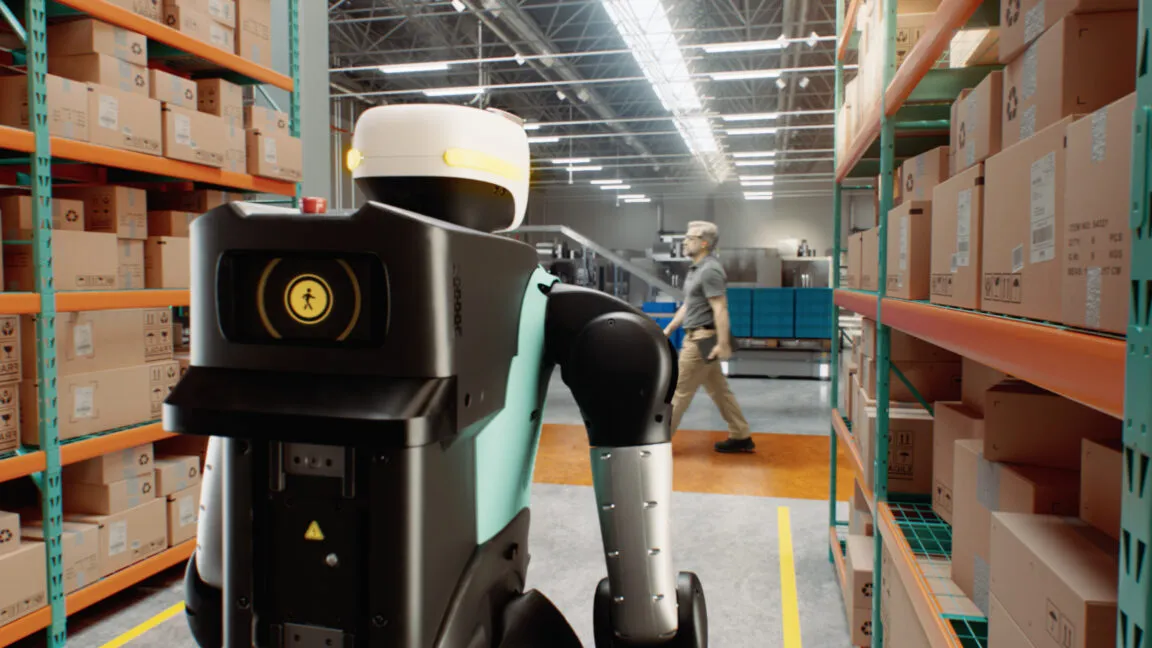
Nvidia, physical AI Nvidia's big bet on physical AI aims for safer robotaxis, humanoid robots Nvidia develops safety systems for physical AI in robotaxis and humanoid robots. Ars Technica · 8h ago Investors bullish on AI data centers may be fueling Nvidia’s multi-trillion-dollar market capitalization, but the AI chipmaker has also bet billions of dollars on physical AI technologies such as robotics and self-driving cars. Part of that gambit has involved Nvidia developing a full-stack safety system that companies can build upon to reduce the risk of their machines harming nearby people. Nvidia's Halos system launched in 2025 with hardware and software tools to help developers implement guardrails in self-driving cars and other autonomous vehicles. Then the company expanded its safety architecture to more physical AI technologies by announcing Nvidia Halos for Robotics in June 2026—with the goal of enabling safe deployments of autonomous mobile robots in warehouses, humanoid robots walking around…
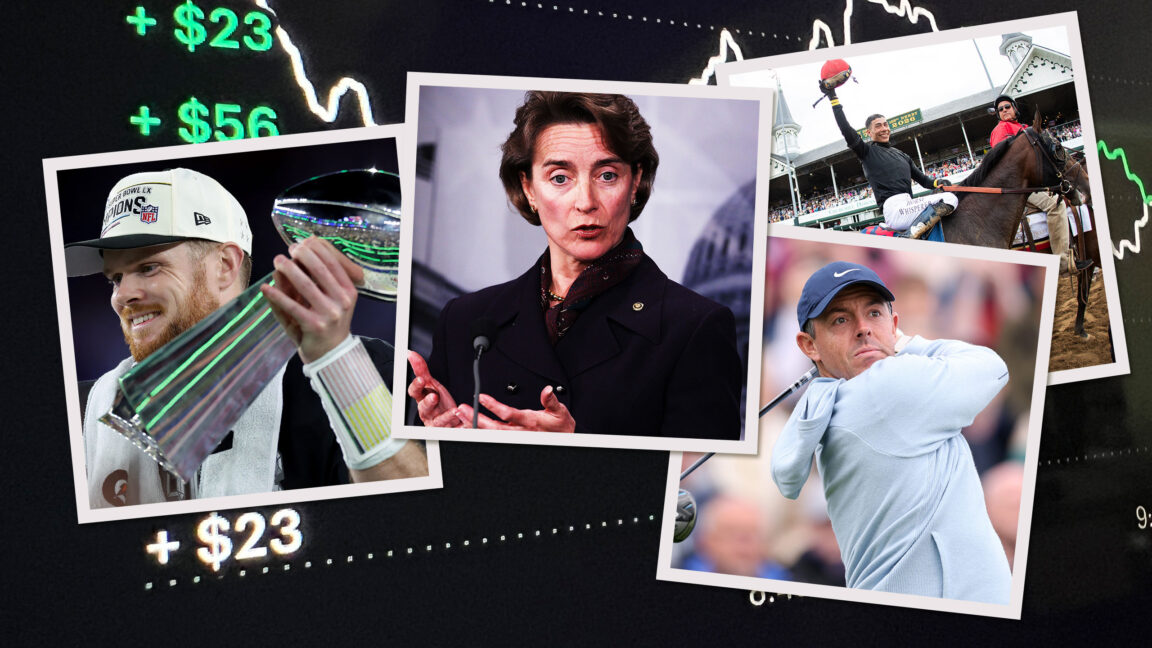
regulation, prediction markets A senator tried to ban gambling on prediction markets—now she's a Kalshi lobbyist Former senator who restricted prediction market contracts now lobbies for the same markets. Ars Technica · 8h ago In July 2010, US Senator Blanche Lincoln (D-Ark.) predicted the rise of prediction markets and the problems they could cause. If not properly regulated, Lincoln warned during Senate proceedings on the Dodd–Frank Wall Street Reform and Consumer Protection Act, prediction markets could evade gambling laws by offering "event contracts" that let people place wagers on sports games. "It would be quite easy to construct an event contract around sporting events such as the Super Bowl, the Kentucky Derby, and Masters golf tournament," Lincoln, who played a key role in making the law that now regulates prediction markets, told fellow senators. "These types of contracts would not serve any real commercial purpose. Rather, they would be used solely for gambling." Today,…
Microsoft, Windows AI Microsoft event debuts new AI-friendly hardware and Windows changes Microsoft announces new hardware and Windows features designed to run AI models locally on PCs. Ars Technica · 19h ago In its first live event in two years, Microsoft today announced its newest Surface laptop, outlined a host of changes coming to Windows 11, and shared a vision of how local-AI and agentic workflows could reshape personal computing for those in the dev community as well as home enthusiasts. Surface Laptop Ultra Originally teased in May 2026, the new Surface Laptop Ultra will be Microsoft's first offering to take advantage of the new Nvidia RTX Spark SoC (system on a chip). The device has a starting price of $2,599, and comes in various SoC and memory configurations, with either a 5120-core or 6144-core Blackwell GPU and up to 128GB of LPDDR5x unified memory. It will begin shipping on October 16…
generative AI, creative software “Software is over”: Bold AI developer takes aim at Adobe with open source clones Open source AI project creates free alternatives to Adobe's Creative Cloud software. Ars Technica · 22h ago For a while, those hoping to avoid the difficulty and expense of dealing with Adobe's Creative Suite have been able to use several free and/or open-source alternatives that replicate some or all of those capabilities. Now, one developer is using AI-powered reverse engineering to mimic the look, feel, and functionality of Adobe's well-known software with what he hopes will soon be perfect fidelity. Artcraft got its start last year as a "controllable AI for artists" that allows for precise post-generation editing of AI-crafted images and videos. Over the weekend, though, the brand debuted its pivot to a suite of seven open source apps recreating the user interface and tools found in Adobe's Photoshop, Illustrator, Premiere, Lightroom, After Effects, InDesign, and…
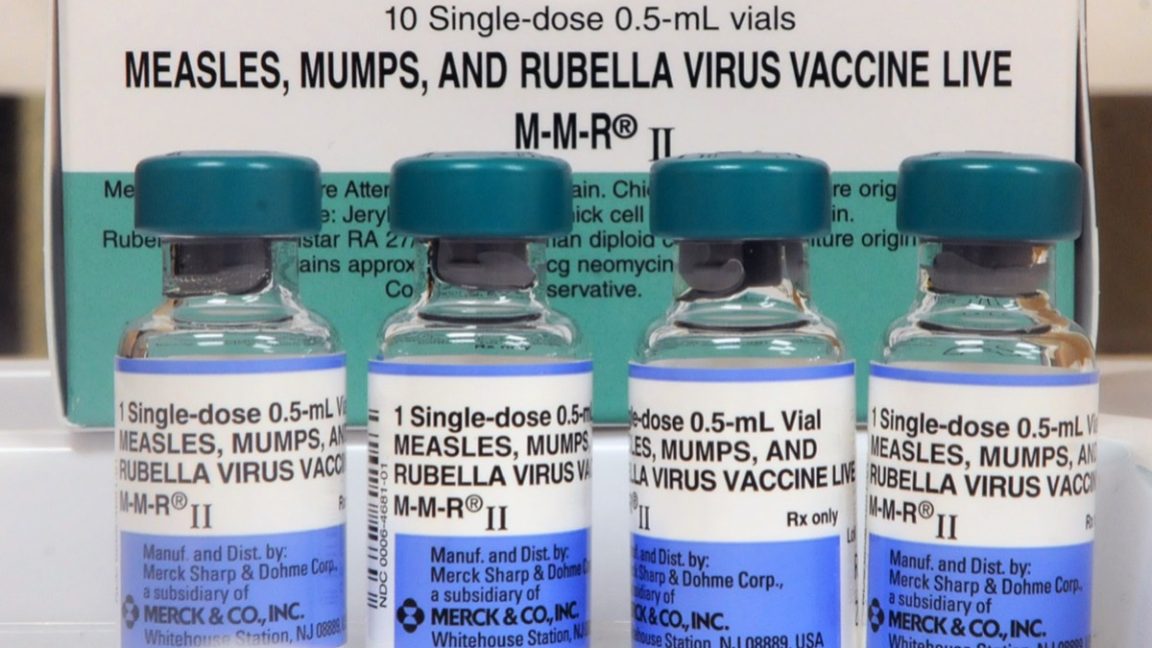
public health PA measles outbreak tops 1,000 cases, largest since disease was eliminated Pennsylvania reports over 1,000 measles cases in its largest outbreak since elimination. Ars Technica · 23h ago Pennsylvania's explosive measles outbreak is now the largest the US has seen since the highly infectious virus was declared eliminated in 2000. With well over 1,000 cases, it's the largest on record since 1991. Pennsylvania's health officials reported 1,078 measles cases in all of 2026 as of this afternoon. That includes 12 cases in January and March, with the remaining 1,066 cases since April, when the current outbreak began. The tally includes 145 cases recorded in the last seven days and 74 identified since the previous update on Monday. Health officials noted that 40 of the 74 cases added today were from more than two weeks ago and are just now being recorded. Among the cases, there have been 207…
network hardware TP-Link problems in US grow amid FCC router ban and four state lawsuits TP-Link faces US market restrictions from FCC router ban and state lawsuits. Ars Technica · 1d ago TP-Link is facing more legal troubles in the US as Florida and three other states filed lawsuits alleging that it lied to consumers about its connections to China and the risks of its routers being exploited by Chinese state hackers. The lawsuits were filed yesterday, about six months after the Federal Communications Commission announced a sweeping ban on consumer-grade routers produced wholly or partly outside of the US. Numerous router makers have obtained exemptions to the ban, but the Trump administration so far has not granted one to TP-Link. Router makers that received exemptions include Netgear, Asus, Adtran, Amazon and its Eero subsidiary, Calix, Nokia, SpaceX's Starlink division, and others. For now, TP-Link is unable to sell its latest Wi-Fi…
chemistry research Chemistry Nobel goes to reactions like those that gave life a hand Chemistry Nobel Prize recognizes research on molecular handedness relevant to life's origins. Ars Technica · 1d ago Life is remarkably selective. Life relies on many molecules with what is termed "handedness"—they're chemically identical but are mirror images of each other. Most chemical reactions will make a 50-50 mix of the left- and right-handed forms of a chemical, but life uses only one of them. In fact, because of the differences between left- and right-handed chemicals, most of the key enzymes used by organisms will fail to work if they're presented with chemicals that have the wrong handedness. That poses a bit of a challenge for origin-of-life research, as we're forced to explain how a world that may have started with an even mix of left- and right-handed chemicals produced organisms that only used one of them. Today's…
public health policy Pediatricians renew call to ban raw milk as anti-science rhetoric reigns Pediatricians renew policy recommendations to ban raw milk, emphasizing benefits of heat treatment. Ars Technica · 1d ago As many doctors are moving ahead with the latest advances of modern medicine—from powerful obesity drugs to breakthrough cancer treatments—pediatricians are being forced to turn back, fighting to maintain advances in children's health that were hard-won decades ago. With anti-vaccine advocate Robert F. Kennedy Jr. as health secretary, the American Academy of Pediatrics (AAP) has spent a considerable amount of time and resources in the past year fiercely defending lifesaving vaccinations—safe, routine shots that have saved the lives of millions of children over decades and thwarted untold suffering and disability. But just this week, The New York Times reported that Ken Paxton, the attorney general of Texas, has opened aggressive investigations against pediatricians simply because they vaccinated their patients. Paxton…
AI fraud and music Fraudster jailed for using 10K bots and AI songs to outstream Taylor Swift Man jailed for using AI-generated songs and bot networks to steal $8 million in music streaming royalties. Ars Technica · 1d ago After pleading guilty, a 54-year-old North Carolina man, Michael Smith, was sentenced to 18 months in prison for using artificial intelligence to generate songs for a scheme that stole millions from music streaming platforms. In a press release Tuesday, the US Department of Justice said that Smith is the first American criminally charged with AI-assisted streaming fraud. First charged in 2024, Smith successfully ran the scheme for seven years without detection.
electric vehicles Jaguar Type 01 debuts; now, no one remembers the electric Ferrari Jaguar Type 01 electric car design generates online debate about EV aesthetics. Ars Technica · 1d ago Does it feel like people are perhaps a little grumpier or more on edge these days? It’s not like it’s without reason. There are wars. The climate is going haywire. Someone just died of plague. Scientific research is under attack. Machines keep stealing humans’ work. The media is a mess. And just when it all starts to feel a little overwhelming, Jaguar goes and unveils a new car. The Type 01 is the first model to arrive from Jaguar’s rebirth. The British carmaker was an early entrant to the modern EV market with the 2017 I-Pace, which was fun to drive even if it was too small inside and perhaps completely unreliable. An all-electric sedan was supposed to be next,…
tech manufacturing policy Trade group crunches numbers on Trump’s impossible push for 100% US-made tech CTA estimates Trump's 100 percent US-made tech mandate would cost firms $230 billion. Ars Technica · 1d ago One of Donald Trump’s biggest goals as president is to increase domestic manufacturing and reshore supply chains so that the most in-demand technologies in the world can be 100 percent made in the United States. By executive order last December, he launched his “Genesis Mission,” an ambitious plan seeking to leverage US dominance in AI to maintain or seize an edge in advanced robotics, biotechnology, semiconductors, and nuclear technologies. According to Trump, that plan works best with self-sustaining supply chains. Not even neighboring countries or longtime allies should be relied upon to manufacture a single component of any US product in his ideal world. The Consumer Technology Association (CTA) has long warned that Trump’s reshoring goals are not grounded in…
LLM capability Mistral says "Le Chonk" can challenge the best AI models Mistral releases open-weight model Le Chonk claiming performance parity with top closed models. Ars Technica · 1d ago As tensions mount over who gets access to top-end artificial intelligence, French company Mistral has released a new freely available model that it claims can compete with the very best from the US and China. The new 1 trillion-parameter model, Mistral Large 4—nicknamed Le Chonk—can be used and customized by anyone. It’s currently available in preview, with a final version to follow by the end of the month. Though Le Chonk is built to compete with leading general-purpose models, it’s optimized specifically for coding and cyberdefense, as well as tasks particular to manufacturing, finance, electrical engineering, and other niches. “There are a lot of areas where the other labs will not focus that much,” Guillaume Lample, cofounder and chief scientist…
AI detection Google rolls out improved SynthID AI content detector, now available globally Google expands SynthID detector globally to identify AI-generated content from multiple sources. Ars Technica · 1d ago Every piece of AI content from Google's Gemini models has a hidden SynthID label, which makes it very difficult to pass the content off as authentic. SynthID has also gotten buy-in from other major AI players, but actually checking for those invisible watermarks has been a convoluted process. It's going to be a little easier going forward, though. Google has announced that its SynthID detector now supports watermarks from all its partners, and it's available for anyone to use on a new dedicated website. SynthID is an invisible signal encoded in the pixels of AI-generated images and videos, and in the waveform of AI audio. Google says Gemini alone has integrated SynthID with over 180 billion images and videos, plus…
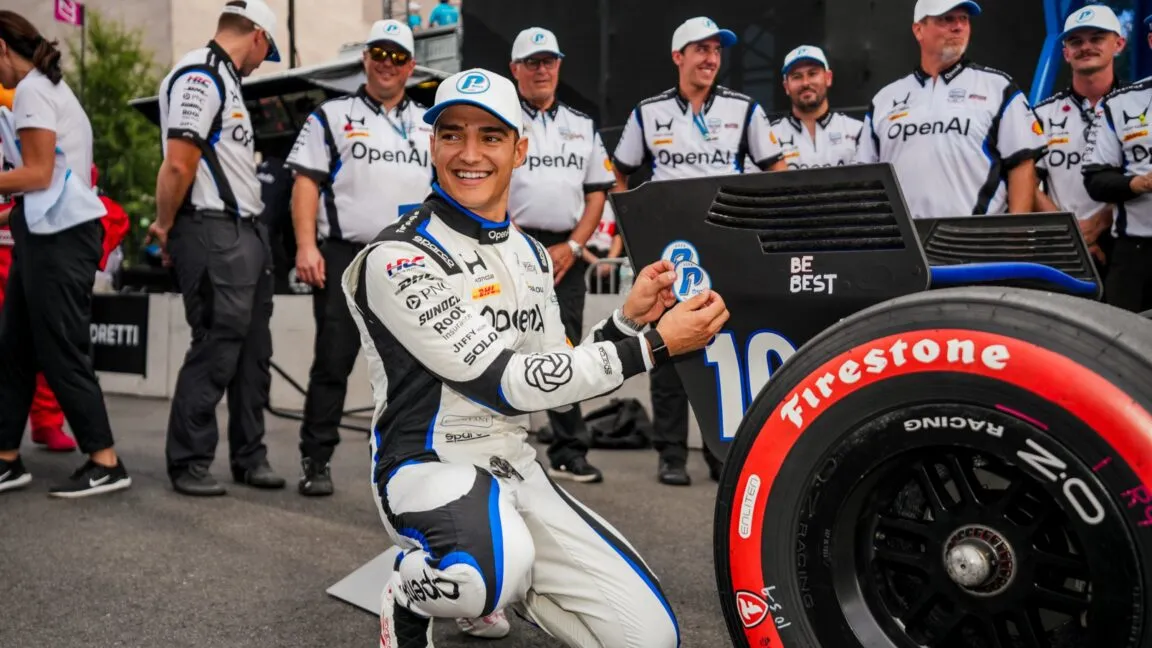
AI in motorsport AI/ML is becoming a performance factor in motorsport OpenAI supports Ganassi motorsport team with AI assistance on vehicle setup optimization. Ars Technica · 1d ago There’s been something of a change in the world of motorsport over the past few years. It has to do with where the money comes from. In the old days, it was tobacco, and to a lesser extent booze. Today such things are mostly banned, and when you look at a racecar covered in sponsor logos, you’re likely to see something crypto-, cyber-, or AI-related. This makes sense—a larger and larger proportion of our GDP is wrapped up in those segments. They’re the ones with all the money, and it takes money to go racing. So at the amateur level, we’ve seen tech CEOs replace dentists as the privateer of choice: This past weekend’s Petit Le Mans included co-founders of…
Entertainment Review: Fine, let's talk about Digger Film review of Digger. Ars Technica · 1d ago I found the trailer for Digger intriguing, starring a nearly unrecognizable Tom Cruise and giving off strong Doctor Strangelove vibes. Plus, it is four-time Oscar-winning director Alejandro G. Iñárritu’s (Birdman) first English-language film since 2015’s The Revenant. Those elements quickly moved it near the top of my "must-see" list even if details about the actual plot were lacking. Given Iñárritu’s pedigree, the film seemed poised to be prime Oscar bait. (Major spoilers appear below the gallery. We'll give you a heads-up when we get there.) By now it's clear that Digger is on track to be one of the biggest bombs of the year instead, racking up a mere $20 million globally its opening weekend, against a $125 million (possibly…
space exploration If you're looking, here's a "good deal" for NASA and the European Space Agency NASA and European Space Agency pursue joint gravitational wave detector as cost-effective deal. Ars Technica · 1d ago It's no surprise that NASA's new tack toward foreign partnerships—good deals only, please—is challenging preconceived notions of international cooperation in space. Without a massive budget hike, the US space agency's emphasis on building a Moon Base and winning a competition for lunar real estate and resources with China will inevitably leave lesser priorities behind. Gone is the Lunar Gateway, a space station that was to be assembled in orbit around the Moon. For the United States, Gateway was an unnecessary distraction and expense as NASA goes all-in on placing a surface station near the Moon's south pole.
Autonomous weapons Drones sink ships near NATO countries in “unacceptable” attacks, EU says Two cargo ships sunk and sailors dead in drone attacks near NATO countries. Ars Technica · 1d ago Drones sank two cargo ships and damaged a third in the exclusive economic zones of NATO member countries for the first time, killing at least two sailors. The attacks represent a notable escalation as Black Sea commercial shipping has increasingly come under attack during the Russian invasion of Ukraine, with Russia also being accused of carrying out “hybrid warfare” incidents across Europe. The Togo-flagged cargo ship Alfa Watan sank, and the Palau-flagged cargo ship Able was set ablaze after being attacked by multiple sea and aerial drones about 80 miles (128 kilometers) off the coast of Bulgaria on October 6, according to the Associated Press. In an interview, Bulgarian Prime Minister Rumen Radev described the incidents as “an unacceptable attack…
AI regulation OpenAI will watermark ChatGPT outputs by default—but only in the EU OpenAI adds watermarks to ChatGPT outputs in EU but admits they are unreliable. Ars Technica · 1d ago OpenAI will begin automatically watermarking text generated with ChatGPT in the European Union, the company has announced. It will also offer the watermarking feature in other regions, but it will be off by default outside of the EU. The move in Europe is driven by a need to comply with the EU AI Act, which took effect in August. It requires marking content produced by AI models in a way that another tool can detect. Unfortunately, there is still no completely effective and reliable way to do that. A few standards already exist, like SynthID and the C2PA project, but they are relatively easy to circumvent for anyone with basic know-how. The same is likely true for OpenAI's watermark. Its…
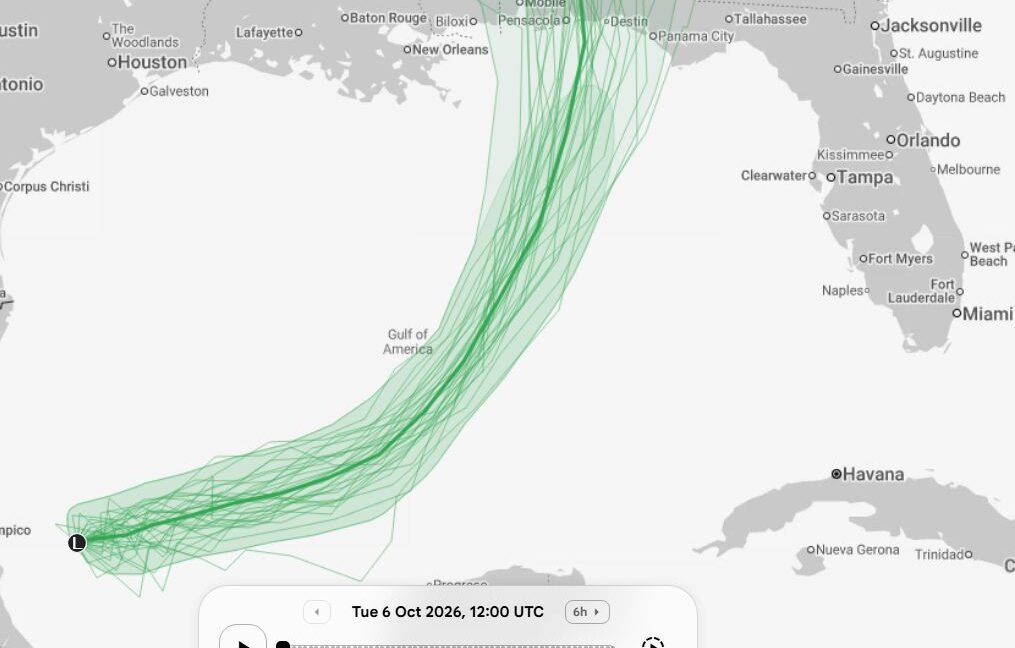
Weather It looks like the Atlantic storm season may finally produce a hurricane Atlantic storm season remains unusually quiet so far this year. Ars Technica · 2d ago A low-pressure system in the western Gulf of Mexico should soon become a tropical storm, and based on the latest forecast modeling, it has a decent chance of becoming a hurricane. Normally, a hurricane forming in early October would not be particularly noteworthy. However, this year the development of a hurricane would be a big deal—because it has not happened yet. In the modern hurricane record—an era dating to about World War II when there has been aircraft reconnaissance and later continuous satellite coverage—there has never been an Atlantic season without a hurricane, and no season has gone this late without one forming.
Cybersecurity Hackers obtain counterfeit TLS certificates for Google and other large services Hackers obtain counterfeit TLS certificates for Google and other services. Ars Technica · 2d ago Attackers hijacked three top-level domains and used their control to mint counterfeit TLS certificates for Google and other large organizations, Google said Tuesday. The attackers launched a series of attacks on the .gh, .sl, and .as country code top-level domains (ccTLDs) and then modified authoritative DNS records for selected domains within those namespaces. By controlling those DNS records, the attackers were able to pass automated domain control validation checks and obtain unauthorized certificates for “several Google domains” and “several leading global brands and widely used online services.” Google said it updated Chrome to block all certificates it identified as unauthorized, and worked with the issuing certification authorities to ensure the unauthorized certificates for Google properties were revoked. Certificate issuance: The…
media mergers Paramount completes $111B Warner merger, creating “Skydance” behemoth Paramount completes acquisition of Warner Bros. to form Skydance entertainment company. Ars Technica · 2d ago Paramount Skydance completed its $111 billion merger with Warner Bros. Discovery today, after a last-ditch effort to block the deal was rejected by Supreme Court Justice Elena Kagan. The post-merger company is called Skydance, taking the name of a firm that Paramount bought in a separate deal last year. The new Skydance combines two of the largest movie studios, streaming services Paramount+ and HBO Max, CBS, CNN, "and a portfolio of live sports including CBS Sports and TNT Sports, as well as a deep programming library and expansive collection of brands and franchises," Skydance said today in a press release announcing completion of the deal. The merger was delayed a bit by a lawsuit filed by California and 11 other…