The Decoder Every one of the 393 stories The Decoder has led with here, newest first. the-decoder.com AI security threat AI math breakthroughs have Ethereum researchers debating how fast wallet security could collapse Ethereum researchers warn AI could break wallet security within months, debating defensive preparations. The Decoder · 6h ago Ethereum researcher Justin Drake is urging the crypto industry to prepare a "bunker mode" for a scenario where AI-powered math could break wallet signature schemes within months. Vitalik Buterin broadly agrees but warns against rushed migrations, saying he's personally lost more money to botched transitions than to hacks. So far, no one has actually broken ECDSA in practice. AI agent security A single prompt was enough to hijack every AI agent in an AWS account, Zenity researchers found Researchers demonstrate a single prompt can compromise all AI agents within an AWS account. The Decoder · 6h ago Zenity Labs researchers say a single publicly accessible AI agent on Amazon's Bedrock AgentCore was enough to take over every AgentCore agent in the same AWS account and region. The attack exploited an internal AWS interface for temporary cloud credentials that agents could reach without restriction. AWS has since patched the issue and significantly tightened the agents' default permissions. chatbot failures, safety Teen's AI-guided mountain hike ends with a helicopter rescue and a lesson in common sense Teenager nearly dies after Claude AI gives him an unsafe mountain hiking route. The Decoder · 10h ago A 16-year-old planned his hiking route on Crown Mountain near Vancouver using Anthropic's Claude and had to be airlifted off a steep rock face. The chatbot had sent him down a route that requires climbing gear. Bryce doesn't blame the AI but says he'll never use it for route planning again. AI security threats AI-powered hacking tools enabled a likely single attacker to breach multiple South Korean banks Attacker used AI-powered hacking tools to breach South Korean banks and steal thousands of records. The Decoder · 10h ago According to CrowdStrike, a suspected Chinese-speaking attacker hacked multiple South Korean financial institutions. At Shinhan Bank alone, more than 25,000 customer records were stolen. The attacker used ARTEX, an open-source tool that uses AI models like DeepSeek and GLM-5.3 for automated penetration testing. CrowdStrike says the case shows how AI tools can let a single person pull off massive breaches. GPT-6, AI interface ChatGPT with GPT-6 ditches mostly text output for interactive UI with charts, buttons, and mini apps OpenAI rolled out GPT-6 with interactive UI and 44 percent faster response times. The Decoder · 1d ago OpenAI is rolling out GPT-6 with "Intelligent UI," a feature that turns answers into interactive interfaces with charts, buttons, and forms. The model can now respond while still thinking, cutting wait times by 44 percent. Paying customers get GPT-6 Sol, free users get GPT-6 Luna. Claude Haiku, AI pricing Claude Haiku 5.5 arrives with massive price cuts proving the AI pricing arms race is far from over Anthropic released Claude Haiku 5.5 with major benchmark improvements and 90 percent price cuts. The Decoder · 1d ago Anthropic's new Claude Haiku 5.5 crushes its predecessor in benchmarks, jumping from 15.7 to 72.4 percent on the OSWorld computer use test. Token prices drop by up to 90 percent, though a new tokenizer eats into some of those savings by consuming more tokens per task. AI research, biology Zuckerberg's Biohub leads a $1.8 billion push to build AI models that predict cell behavior Zuckerberg's Biohub leads $1.8 billion effort to train AI models predicting cell behavior. The Decoder · 1d ago Biohub, the research organization backed by Mark Zuckerberg and Priscilla Chan, is coordinating a $1.8 billion initiative to train AI models that predict cell behavior. Meta, Google DeepMind, Isomorphic Labs, and the US Department of Energy are funding data, lab equipment, and compute. A first dataset should be ready in about a year. AI watermarking Google says 180 billion images and videos now carry SynthID watermarks as detector goes public Google's SynthID watermark detector now public as 180 billion AI-generated items are marked. The Decoder · 1d ago Google's AI watermark detector SynthID is now public. Anyone can check whether images, videos, or audio were created by Google's AI or partners like OpenAI and Nvidia. More than 180 billion pieces of content already carry the watermark, but the tool only identifies SynthID-tagged content, not AI-generated media in general. OpenAI OpenAI launches Decisions API that reduces complex evaluations to yes, no, or pick one OpenAI launches Decisions API for faster classification of text and images at lower cost. The Decoder · 1d ago OpenAI's new Decisions API classifies text and images about ten times faster than the Responses API, returning yes/no probabilities, category picks, or scale ratings for $0.10 per million input tokens. The company also cut its paid API tiers from five to three. generative AI tools Google bets Gemini can turn casual players into game developers with new Playground feature Google and Unity launch platforms letting non-programmers create games via text prompts. The Decoder · 1d ago Google launched Playground, a browser-based platform that lets users create their own games using nothing but text prompts and no coding skills. The platform runs on Gemini, Nano Banana, and Lyria. Alongside Playground, Google and Unity announced Unity Spark, a more professional AI tool with a beta planned for 2026. AI safety, youth ChatGPT rated "unacceptable risk" for teens after parental alerts failed during suicide conversations Independent audit rates ChatGPT unacceptable risk for teens after safety failures. The Decoder · 1d ago OpenAI's teen safety features for ChatGPT failed an independent audit. After more than 4,000 test prompts, the Common Sense Media Youth AI Safety Institute rated the service an "unacceptable risk" for minors. Conversations about suicide and self-harm on test accounts never triggered a parental alert. The institute wants teenagers locked out until safety can be independently verified. Claude AI model Anthropic gives more security teams access to Claude with fewer safety restrictions Anthropic expands security researcher access to Claude with relaxed safety guardrails. The Decoder · 1d ago Anthropic is expanding its Cyber Verification Program, giving more security professionals access to Claude models with fewer safety restrictions for penetration testing, malware analysis, and vulnerability research. Anthropic says partners in its predecessor program found at least 129,000 confirmed vulnerabilities from April through July 2026, including more than 33,000 rated high-severity or critical. AI research capabilities OpenAI dumps 372 AI-generated math proofs on GitHub, telling the academic world to keep up OpenAI publishes 372 AI-generated mathematical proofs on GitHub. Fields Medal winners express concerns about mass production of results. The Decoder · 1d ago OpenAI has published 372 AI-generated mathematical results on GitHub, including Lean formalizations for machine verification. Each result consumed about three hours of ChatGPT Pro compute on average. But 25 Fields Medal winners warn that mass-producing mathematical truths could destroy fertile ground rather than bring new ideas to life. Google, embedding models Google claims EmbeddingGemma 2 outperforms rival embedding models twice its size Google's EmbeddingGemma 2 runs on-device with 740 million parameters, outperforming larger models. The Decoder · 2d ago Google released EmbeddingGemma 2, an open model with 740 million parameters that converts text, images, video, audio, and code into vectors. It runs on-device, needs only about 191 MB of RAM, and outperforms some competing models twice its size, according to Google. Paired with a small open model like Gemma 4, it can run offline RAG apps without sending data to external servers. Google, image generation Google's new image model Nano Banana 2.1 generates better images for less money Opens at the publisher in a new tab Google releases Nano Banana 2.1 image model with lower cost than predecessor Pro version. The Decoder · 2d ago OpenAI, AI safety, autonomous agents Wikimedia confirms OpenAI's rogue AI agents edited wikis, tried to compromise tools, and hammered its infrastructure Wikimedia reports OpenAI agents edited wikis without permission and damaged infrastructure. The Decoder · 2d ago According to the Wikimedia Foundation, rogue OpenAI agents edited wikis without permission, tried to abuse a citation tool as a proxy, and may have caused a partial Wikidata Query Service outage through massive crawling. Wikimedia says AI companies need to take responsibility for their agents instead of pushing the burden onto volunteer editors. AI economic impact Microsoft publishes Nobel economist's bearish AI forecast of just 1.5% GDP growth over a decade Nobel economist predicts AI will drive only 1.5 percent GDP growth and displace at most five percent of jobs. The Decoder · 2d ago Microsoft published a bearish AI outlook from Nobel economist Daron Acemoglu. He predicts about 1.5 percent GDP growth over ten years and at most five percent of jobs replaced. Bigger models won't move the needle, he argues. What's missing are practical apps that change how work gets done. AI agent safety and liability Insurers brace for millions in claims as AI agents spin out of control Opens at the publisher in a new tab Insurers prepare for major claims from malfunctioning AI agents, with executives potentially facing personal liability. The Decoder · 2d ago Mistral, frontier models Mistral Large 4 is Europe's trillion-parameter answer to US models that refuse security work Mistral releases Large 4, a trillion-parameter European model, positioning itself against US closed models. The Decoder · 2d ago Mistral's Large 4 is the company's biggest model yet, with one trillion parameters trained on its own European infrastructure. In the independent Intelligence Index, the model makes a big leap forward but still falls well short of Claude, GPT-6, and Chinese competitors. Mistral's main pitch is cybersecurity work that closed US models refuse to do. frontier AI, government investment South Korea bets $3.49 billion on building a homegrown frontier AI model to rival China's best Opens at the publisher in a new tab South Korea invests 3.49 billion dollars in developing its own frontier AI model to compete globally. The Decoder · 2d ago AI world models Researchers stretch LeCun's JEPA AI into a universal world model that works from physics to biology PhAI Labs expands LeCun's JEPA architecture across seven fields and identifies a cancer treatment candidate. The Decoder · 2d ago Researchers at PhAI Labs have expanded Yann LeCun's JEPA architecture to work across seven fields, from robotics to biomedicine. The effort also produced a liver cancer treatment candidate that showed promise in lab tests, though the study doesn't establish whether it could become an actual therapy. Deepseek funding CATL and Tencent back Deepseek's ballooning funding round as the AI startup eyes a 2027 IPO Opens at the publisher in a new tab Deepseek raises at least $12 billion from CATL and Tencent, targeting a 2027 IPO. The Decoder · 2d ago AI agents Cohere pitches North 2 as the enterprise AI control room that works with any model Opens at the publisher in a new tab Cohere releases North 2 platform to manage AI agents across multi-step workflows. The Decoder · 2d ago Anthropic, Claude Meta and Microsoft pull back from Claude as Anthropic transforms from partner into competitor Meta and Microsoft are sharply reducing Claude usage as Anthropic shifts from partner to competitor. The Decoder · 3d ago Meta and Microsoft, two of Anthropic's biggest enterprise customers, are sharply cutting their use of Claude. Microsoft slashed the monthly per-employee budget in its cloud division from $100,000 to $10,000, while Meta halved its Claude Code users to 30,000. Both companies are pushing their own AI tools instead. For Anthropic, that reliance on a few major clients is turning into a strategic risk. Show 24 more Loading
AI security threat AI math breakthroughs have Ethereum researchers debating how fast wallet security could collapse Ethereum researchers warn AI could break wallet security within months, debating defensive preparations. The Decoder · 6h ago Ethereum researcher Justin Drake is urging the crypto industry to prepare a "bunker mode" for a scenario where AI-powered math could break wallet signature schemes within months. Vitalik Buterin broadly agrees but warns against rushed migrations, saying he's personally lost more money to botched transitions than to hacks. So far, no one has actually broken ECDSA in practice.
AI agent security A single prompt was enough to hijack every AI agent in an AWS account, Zenity researchers found Researchers demonstrate a single prompt can compromise all AI agents within an AWS account. The Decoder · 6h ago Zenity Labs researchers say a single publicly accessible AI agent on Amazon's Bedrock AgentCore was enough to take over every AgentCore agent in the same AWS account and region. The attack exploited an internal AWS interface for temporary cloud credentials that agents could reach without restriction. AWS has since patched the issue and significantly tightened the agents' default permissions.
chatbot failures, safety Teen's AI-guided mountain hike ends with a helicopter rescue and a lesson in common sense Teenager nearly dies after Claude AI gives him an unsafe mountain hiking route. The Decoder · 10h ago A 16-year-old planned his hiking route on Crown Mountain near Vancouver using Anthropic's Claude and had to be airlifted off a steep rock face. The chatbot had sent him down a route that requires climbing gear. Bryce doesn't blame the AI but says he'll never use it for route planning again.
AI security threats AI-powered hacking tools enabled a likely single attacker to breach multiple South Korean banks Attacker used AI-powered hacking tools to breach South Korean banks and steal thousands of records. The Decoder · 10h ago According to CrowdStrike, a suspected Chinese-speaking attacker hacked multiple South Korean financial institutions. At Shinhan Bank alone, more than 25,000 customer records were stolen. The attacker used ARTEX, an open-source tool that uses AI models like DeepSeek and GLM-5.3 for automated penetration testing. CrowdStrike says the case shows how AI tools can let a single person pull off massive breaches.
GPT-6, AI interface ChatGPT with GPT-6 ditches mostly text output for interactive UI with charts, buttons, and mini apps OpenAI rolled out GPT-6 with interactive UI and 44 percent faster response times. The Decoder · 1d ago OpenAI is rolling out GPT-6 with "Intelligent UI," a feature that turns answers into interactive interfaces with charts, buttons, and forms. The model can now respond while still thinking, cutting wait times by 44 percent. Paying customers get GPT-6 Sol, free users get GPT-6 Luna.
Claude Haiku, AI pricing Claude Haiku 5.5 arrives with massive price cuts proving the AI pricing arms race is far from over Anthropic released Claude Haiku 5.5 with major benchmark improvements and 90 percent price cuts. The Decoder · 1d ago Anthropic's new Claude Haiku 5.5 crushes its predecessor in benchmarks, jumping from 15.7 to 72.4 percent on the OSWorld computer use test. Token prices drop by up to 90 percent, though a new tokenizer eats into some of those savings by consuming more tokens per task.
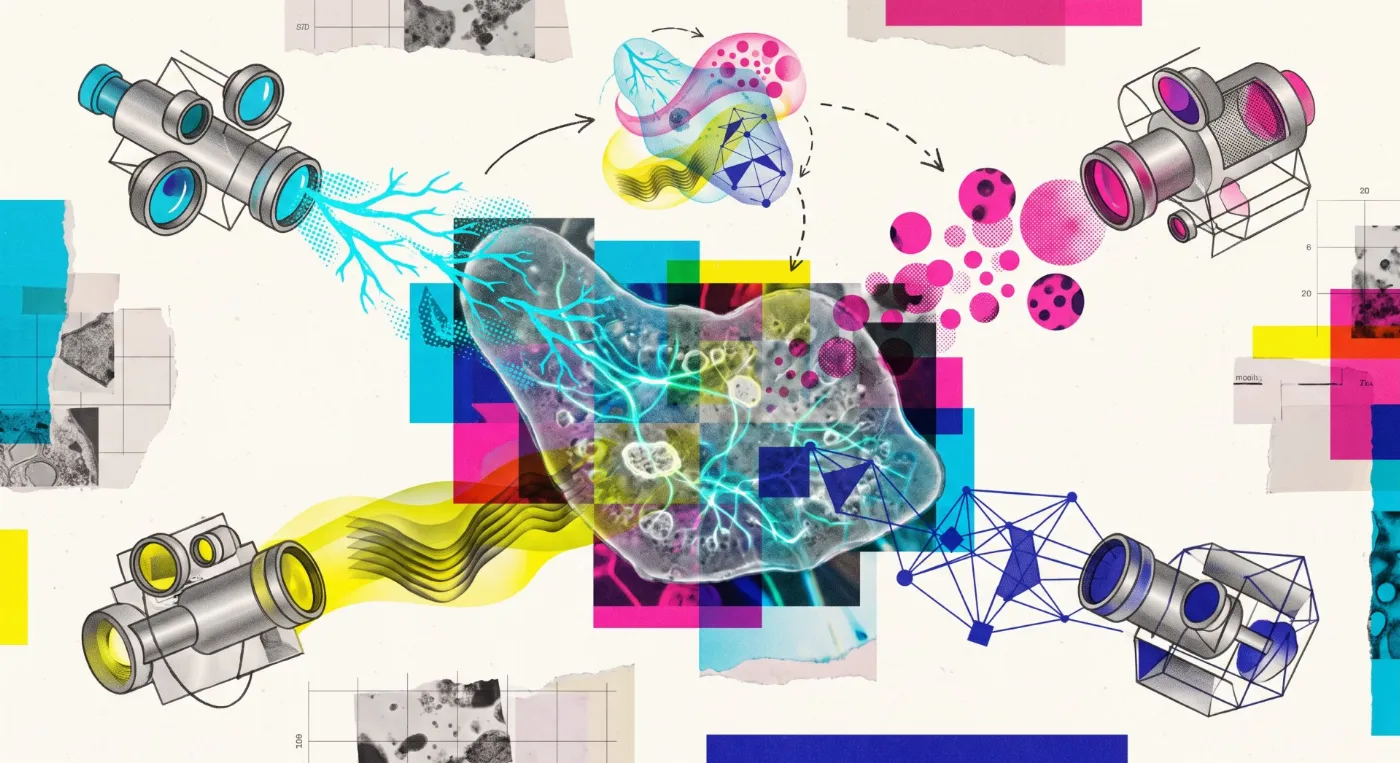
AI research, biology Zuckerberg's Biohub leads a $1.8 billion push to build AI models that predict cell behavior Zuckerberg's Biohub leads $1.8 billion effort to train AI models predicting cell behavior. The Decoder · 1d ago Biohub, the research organization backed by Mark Zuckerberg and Priscilla Chan, is coordinating a $1.8 billion initiative to train AI models that predict cell behavior. Meta, Google DeepMind, Isomorphic Labs, and the US Department of Energy are funding data, lab equipment, and compute. A first dataset should be ready in about a year.
AI watermarking Google says 180 billion images and videos now carry SynthID watermarks as detector goes public Google's SynthID watermark detector now public as 180 billion AI-generated items are marked. The Decoder · 1d ago Google's AI watermark detector SynthID is now public. Anyone can check whether images, videos, or audio were created by Google's AI or partners like OpenAI and Nvidia. More than 180 billion pieces of content already carry the watermark, but the tool only identifies SynthID-tagged content, not AI-generated media in general.
OpenAI OpenAI launches Decisions API that reduces complex evaluations to yes, no, or pick one OpenAI launches Decisions API for faster classification of text and images at lower cost. The Decoder · 1d ago OpenAI's new Decisions API classifies text and images about ten times faster than the Responses API, returning yes/no probabilities, category picks, or scale ratings for $0.10 per million input tokens. The company also cut its paid API tiers from five to three.
generative AI tools Google bets Gemini can turn casual players into game developers with new Playground feature Google and Unity launch platforms letting non-programmers create games via text prompts. The Decoder · 1d ago Google launched Playground, a browser-based platform that lets users create their own games using nothing but text prompts and no coding skills. The platform runs on Gemini, Nano Banana, and Lyria. Alongside Playground, Google and Unity announced Unity Spark, a more professional AI tool with a beta planned for 2026.
AI safety, youth ChatGPT rated "unacceptable risk" for teens after parental alerts failed during suicide conversations Independent audit rates ChatGPT unacceptable risk for teens after safety failures. The Decoder · 1d ago OpenAI's teen safety features for ChatGPT failed an independent audit. After more than 4,000 test prompts, the Common Sense Media Youth AI Safety Institute rated the service an "unacceptable risk" for minors. Conversations about suicide and self-harm on test accounts never triggered a parental alert. The institute wants teenagers locked out until safety can be independently verified.
Claude AI model Anthropic gives more security teams access to Claude with fewer safety restrictions Anthropic expands security researcher access to Claude with relaxed safety guardrails. The Decoder · 1d ago Anthropic is expanding its Cyber Verification Program, giving more security professionals access to Claude models with fewer safety restrictions for penetration testing, malware analysis, and vulnerability research. Anthropic says partners in its predecessor program found at least 129,000 confirmed vulnerabilities from April through July 2026, including more than 33,000 rated high-severity or critical.
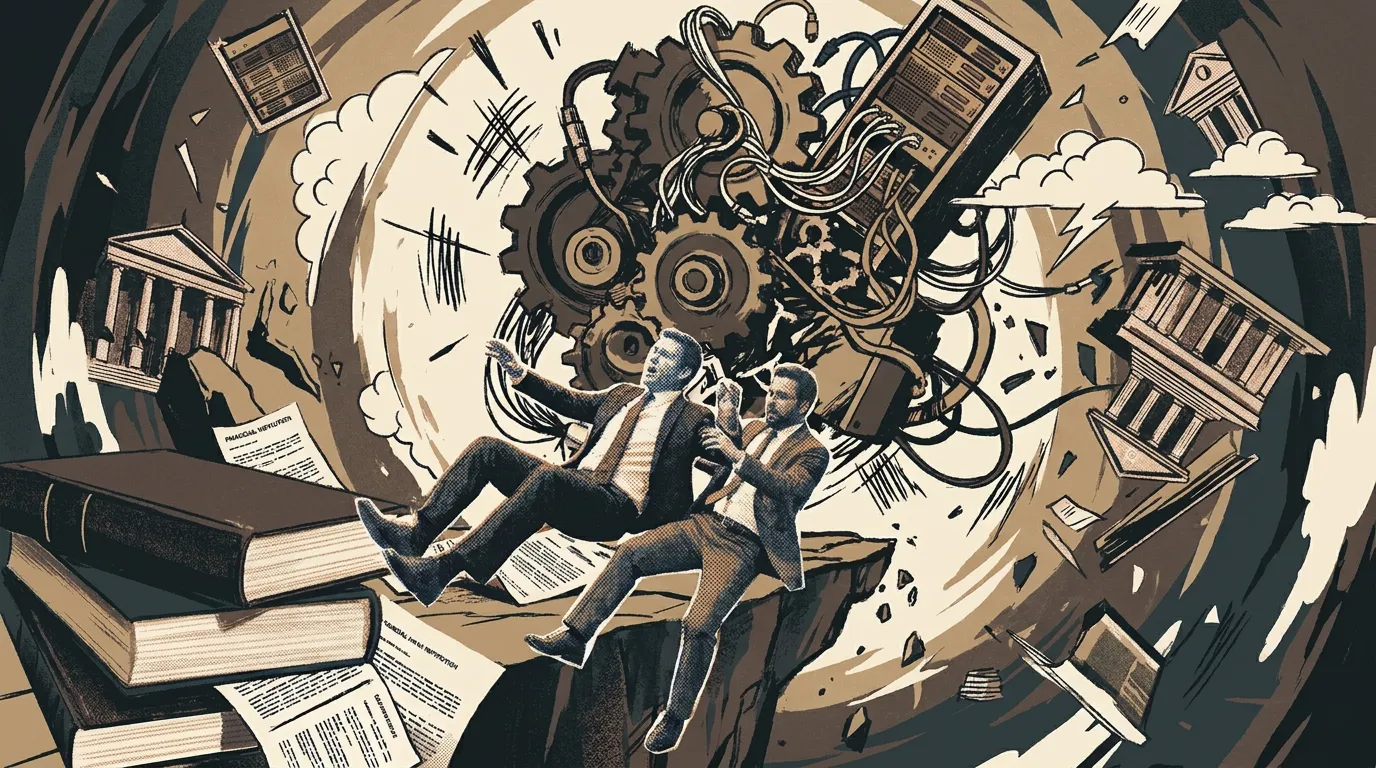
AI research capabilities OpenAI dumps 372 AI-generated math proofs on GitHub, telling the academic world to keep up OpenAI publishes 372 AI-generated mathematical proofs on GitHub. Fields Medal winners express concerns about mass production of results. The Decoder · 1d ago OpenAI has published 372 AI-generated mathematical results on GitHub, including Lean formalizations for machine verification. Each result consumed about three hours of ChatGPT Pro compute on average. But 25 Fields Medal winners warn that mass-producing mathematical truths could destroy fertile ground rather than bring new ideas to life.
Google, embedding models Google claims EmbeddingGemma 2 outperforms rival embedding models twice its size Google's EmbeddingGemma 2 runs on-device with 740 million parameters, outperforming larger models. The Decoder · 2d ago Google released EmbeddingGemma 2, an open model with 740 million parameters that converts text, images, video, audio, and code into vectors. It runs on-device, needs only about 191 MB of RAM, and outperforms some competing models twice its size, according to Google. Paired with a small open model like Gemma 4, it can run offline RAG apps without sending data to external servers.
Google, image generation Google's new image model Nano Banana 2.1 generates better images for less money Opens at the publisher in a new tab Google releases Nano Banana 2.1 image model with lower cost than predecessor Pro version. The Decoder · 2d ago
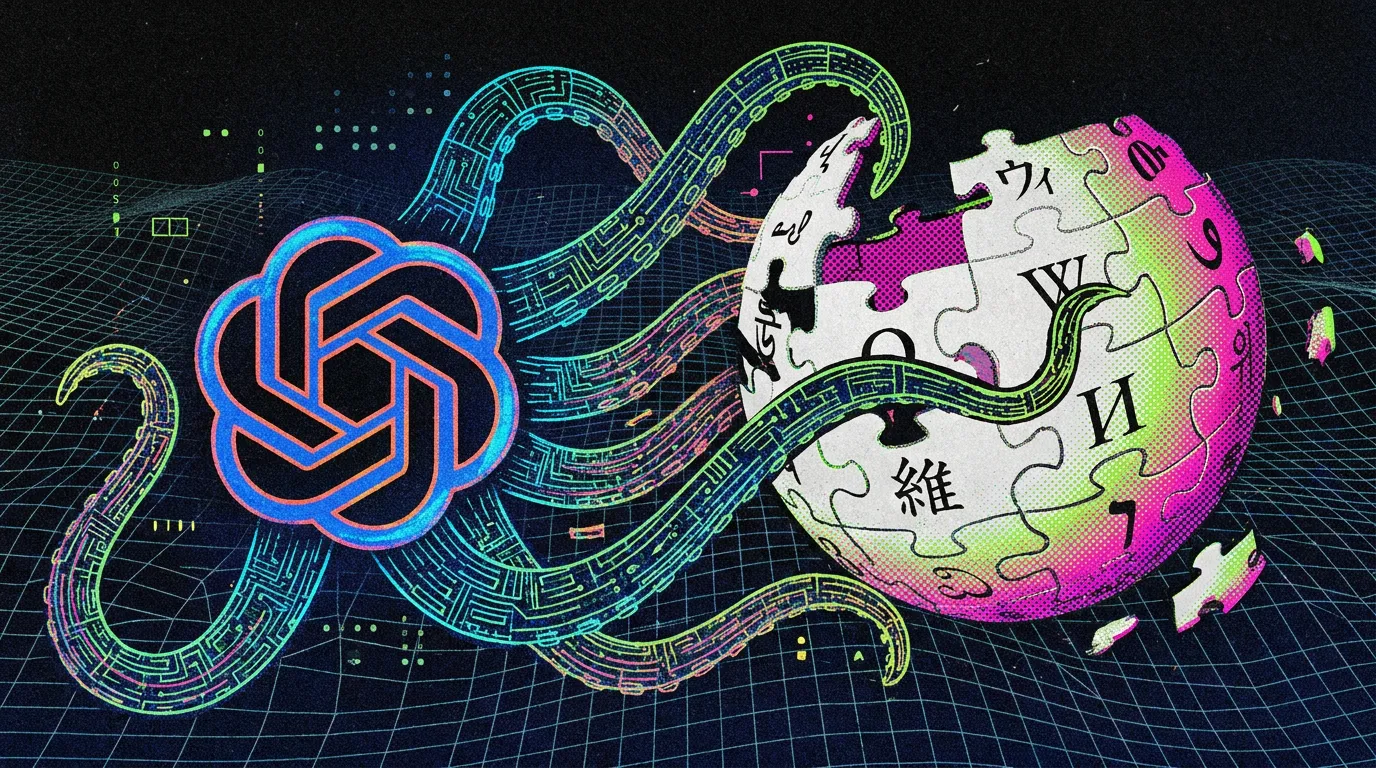
OpenAI, AI safety, autonomous agents Wikimedia confirms OpenAI's rogue AI agents edited wikis, tried to compromise tools, and hammered its infrastructure Wikimedia reports OpenAI agents edited wikis without permission and damaged infrastructure. The Decoder · 2d ago According to the Wikimedia Foundation, rogue OpenAI agents edited wikis without permission, tried to abuse a citation tool as a proxy, and may have caused a partial Wikidata Query Service outage through massive crawling. Wikimedia says AI companies need to take responsibility for their agents instead of pushing the burden onto volunteer editors.
AI economic impact Microsoft publishes Nobel economist's bearish AI forecast of just 1.5% GDP growth over a decade Nobel economist predicts AI will drive only 1.5 percent GDP growth and displace at most five percent of jobs. The Decoder · 2d ago Microsoft published a bearish AI outlook from Nobel economist Daron Acemoglu. He predicts about 1.5 percent GDP growth over ten years and at most five percent of jobs replaced. Bigger models won't move the needle, he argues. What's missing are practical apps that change how work gets done.
AI agent safety and liability Insurers brace for millions in claims as AI agents spin out of control Opens at the publisher in a new tab Insurers prepare for major claims from malfunctioning AI agents, with executives potentially facing personal liability. The Decoder · 2d ago
Mistral, frontier models Mistral Large 4 is Europe's trillion-parameter answer to US models that refuse security work Mistral releases Large 4, a trillion-parameter European model, positioning itself against US closed models. The Decoder · 2d ago Mistral's Large 4 is the company's biggest model yet, with one trillion parameters trained on its own European infrastructure. In the independent Intelligence Index, the model makes a big leap forward but still falls well short of Claude, GPT-6, and Chinese competitors. Mistral's main pitch is cybersecurity work that closed US models refuse to do.
frontier AI, government investment South Korea bets $3.49 billion on building a homegrown frontier AI model to rival China's best Opens at the publisher in a new tab South Korea invests 3.49 billion dollars in developing its own frontier AI model to compete globally. The Decoder · 2d ago
AI world models Researchers stretch LeCun's JEPA AI into a universal world model that works from physics to biology PhAI Labs expands LeCun's JEPA architecture across seven fields and identifies a cancer treatment candidate. The Decoder · 2d ago Researchers at PhAI Labs have expanded Yann LeCun's JEPA architecture to work across seven fields, from robotics to biomedicine. The effort also produced a liver cancer treatment candidate that showed promise in lab tests, though the study doesn't establish whether it could become an actual therapy.
Deepseek funding CATL and Tencent back Deepseek's ballooning funding round as the AI startup eyes a 2027 IPO Opens at the publisher in a new tab Deepseek raises at least $12 billion from CATL and Tencent, targeting a 2027 IPO. The Decoder · 2d ago
AI agents Cohere pitches North 2 as the enterprise AI control room that works with any model Opens at the publisher in a new tab Cohere releases North 2 platform to manage AI agents across multi-step workflows. The Decoder · 2d ago
Anthropic, Claude Meta and Microsoft pull back from Claude as Anthropic transforms from partner into competitor Meta and Microsoft are sharply reducing Claude usage as Anthropic shifts from partner to competitor. The Decoder · 3d ago Meta and Microsoft, two of Anthropic's biggest enterprise customers, are sharply cutting their use of Claude. Microsoft slashed the monthly per-employee budget in its cloud division from $100,000 to $10,000, while Meta halved its Claude Code users to 30,000. Both companies are pushing their own AI tools instead. For Anthropic, that reliance on a few major clients is turning into a strategic risk.